
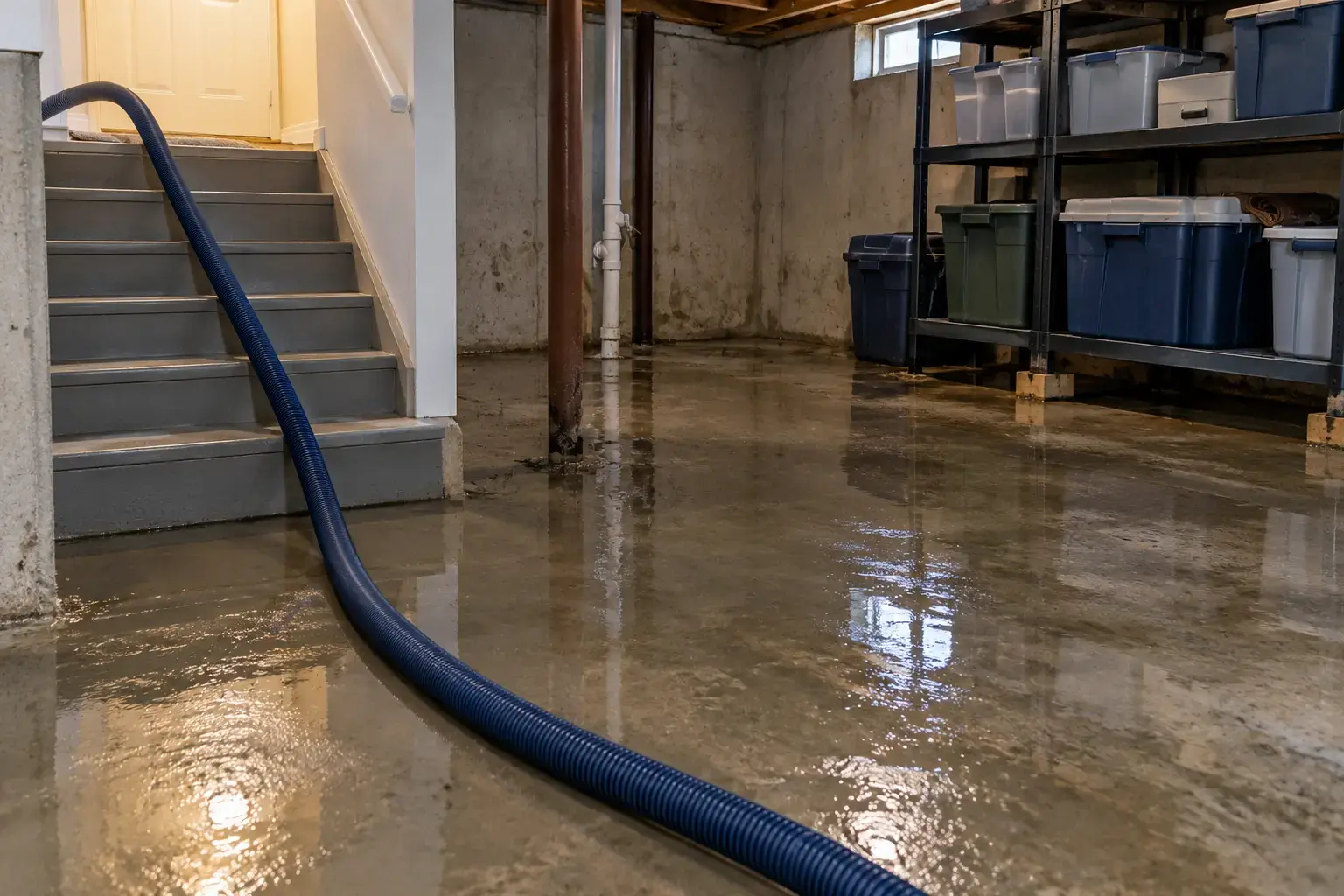
Storm water can enter from more than one direction. Rain through a roof opening can wet a ceiling while water crossing a doorway reaches the floor. Both can leave stains, swelling and damp odors, but their routes and what the water contacted affect the cleanup plan.
Port Republic sits in Calvert County between the Chesapeake Bay to the east and the Patuxent River to the west. Bayfront homes in the region are exposed to storm surge and wind-driven rain. When water gets indoors, start with safe access and a record of where it appeared, then arrange storm and flood damage cleanup around the actual entry and wet materials.
1. Identify how storm water entered the building
Look at the relationship between exterior openings, ceiling marks and wet floor edges from a safe location. Note whether the problem appeared during heavy rain, after water collected outside or only once a room below became wet. The first visible stain can be downstream from the original opening.
Describe each entry separately when you call. A team may need to review the ceiling cavity and the lower floor in the same property. For the overall sequence, our water damage restoration page explains the connection between source control, removal, drying and repair planning.
| Entry route | What you may notice | Where the review should extend |
|---|---|---|
| Roof or overhead opening | Ceiling stain, dripping or damp attic insulation. | The cavity above the stain and the adjoining wall tops. |
| Window or exterior wall opening | Wet trim or flooring near the opening. | Wall bases, cabinet edges and the floor layers below. |
| Water crossing a threshold | Debris or a wet path starting at the entrance. | Floor coverings and the wall bases along that path. |
| Water collecting at a lower level | Basement pooling or wet stored belongings. | Finished lower walls, contents and safe equipment access. |
| Water beneath a crawl-space floor | Pooling below or odors rising indoors. | Insulation, joists and the accessible subfloor underside. |
2. Check rain entry above the occupied room
A roof leak can reach insulation and travel along framing before it drips into a room. A bucket collects the visible drip, while the assembly above can remain wet. Keep clear of sagging ceilings and wet light fittings, and avoid climbing onto a wet or damaged roof to find the opening.
Roof leak water damage cleanup addresses the interior moisture; correction of the roof entry needs its own repair plan. If the stain spreads into a wall top or the room below, include those surfaces in the report. Our ceiling leak cleanup guide explains why the visible mark is only the starting point for an overhead inspection.
Before new board or paint is installed, ask how the cavity was checked and whether the entry has been corrected. Another rain event can wet an assembly that was still being dried.
3. Include the basement or crawl space in the water path
Basements and crawl spaces are both common regional home features. A lower level can collect water around stored items and finished walls, while an under-floor space can hold water beneath an occupied room. Give dispatch the foundation type and describe which level became wet first.
With flooded basement cleanup, depth, source, contents and safe access shape the removal sequence. With crawl space water damage, clearance, wet insulation and access to the subfloor underside matter. Stay outside standing water near electrical equipment and avoid entering an unfamiliar confined space.
Many rural homes in the region use private wells and septic systems. Mention those systems and any wastewater signs during the call so a plumbing or drainage issue is not overlooked alongside the storm entry.
4. Treat debris and wastewater as part of the work scope
Exterior water can bring soil, debris and other contaminants into a building. A clear-looking puddle still needs its source and contact history reviewed. If a drain or fixture backed up, report that separately from rain entry so the handling plan accounts for wastewater.
Keep people and pets outside the affected room and avoid carrying wet materials through dry spaces. Sewage backup cleanup includes separation of the contaminated area and decisions about porous materials. Moving a dirty rug into an unaffected bedroom just to clear the floor can create another handling problem.
Ask how water, debris and damaged wall or floor coverings will be removed, and where contents will be staged. A defined route keeps cleanup access organized while the wet boundary is being established.
5. Remove standing water and inspect what it soaked
Water extraction reduces pooled liquid water. The next checks establish what remains wet beneath coverings, behind trim and inside cavities. A room that looks clearer after pumping can still contain a substantial amount of absorbed moisture.
Report swelling, lifted boards, soft wallboard and damp cabinet bases. A moisture inspection helps define accessible affected surfaces and any additional opening needed. Do not start sanding, patching or enclosing an assembly just because the exposed floor has been wiped.
| Building material | Useful observation | Relevant service |
|---|---|---|
| Wallboard | Softness, swelling and wet insulation behind it. | Water-damaged drywall removal |
| Wood floor | Board movement and subfloor moisture. | Wood floor water damage cleanup |
| Framing or layered floor | Retained moisture after surface water is removed. | Structural drying |
| Affected porous materials | Visible growth or a persistent damp condition. | Mold removal and remediation |
6. Dry the materials while addressing the moisture source
Air movement, dehumidification and access to wet surfaces work together during drying. Material readings help show whether an assembly is progressing, whether a concealed area needs more access and when the next repair decision can be made. Discuss the setup before moving equipment or switching it off.
The EPA mold and moisture guide recommends drying water-damaged areas and items within 24–48 hours to help prevent mold growth. Report a returning musty smell or visible growth and avoid disturbing it. The cleanup needs to address the damp condition as well as affected materials.
A dry forecast does not remove moisture already in insulation or beneath a floor. Keep the building cleanup and the correction of the entry point coordinated so water is not continually added back into the drying area.
7. Build a storm-damage record by room and entry route
Photograph wide room views, the visible entry point, wet floor edges and any debris from a safe position. Take a separate set for each affected level. A photo showing a ceiling stain and the room below helps connect details that otherwise look unrelated.
Record when water was discovered, what conditions you observed and when a roof opening, threshold issue or plumbing source was addressed. Save the source-repair and cleanup records separately but keep them in the same folder. Our insurance documentation guide shows how to organize photos, inventories and changes to the scope.
Ask your insurer which coverages and reporting steps apply. Maryland’s weather-related damage guidance distinguishes flood coverage from standard homeowners coverage; the source matters when you describe the loss.
8. Plan cleanup around occupants, rentals and workspaces
Identify who can approve access and which rooms need to stay separated. In a rental, notify the owner or authorized manager about the affected spaces. For a business, record staff routes, stock locations and shared areas the water may have reached.
Commercial water damage restoration uses a defined work boundary and site contact to coordinate those needs. At home, the same planning helps keep people away from wet materials and preserves a dry route for entry. Do not move contaminated items into an occupied space to create room for equipment.
For local details, see the service-area pages for Chesapeake Beach and Solomons. Describe your property’s observed water entry when you call so the inspection follows the loss itself.
9. Review source control before the next rain
Keep a note of which entry repairs are complete and which remain temporary. If water appears again, report the time, affected room and whether it followed rain or fixture use. That update can help distinguish a continuing opening from moisture still held in the assembly.
Ask which surfaces remain open for drying and what must happen before finishes are restored. Keep access clear to the work area and retain the moisture and cleanup records with the source-repair documents. If an interior pipe release happened at the same time, the first-hour pipe-burst guide covers source isolation and the spaces to check below the leak.
Call the team with the current conditions and access details. Emergency dispatch and mitigation are available 24/7 for water damage in the service area.
More questions about this guide
Can a storm ceiling stain appear away from the roof opening?
Yes. Water can follow framing or the upper surface of ceiling material before dripping into the room. Report the visible stain and any adjoining wet areas so the cavity review follows the route.
Why separate an outside flood entry from a drain backup in the report?
The source and what the water contacted affect handling, cleaning and removal decisions. Report both when they occur so the plan addresses exterior debris and wastewater conditions.
What should I do if new rain enters during structural drying?
Notify the cleanup contact and arrange correction of the entry. The affected boundary and equipment plan need to account for continued water entry before finishes are enclosed.