An unnoticed leak in an unused room
A Huntingtown rural/suburban property can have a leak away from the room you use most. We follow the wet boundary into adjoining surfaces and spaces below, rather than stopping at the first stain.
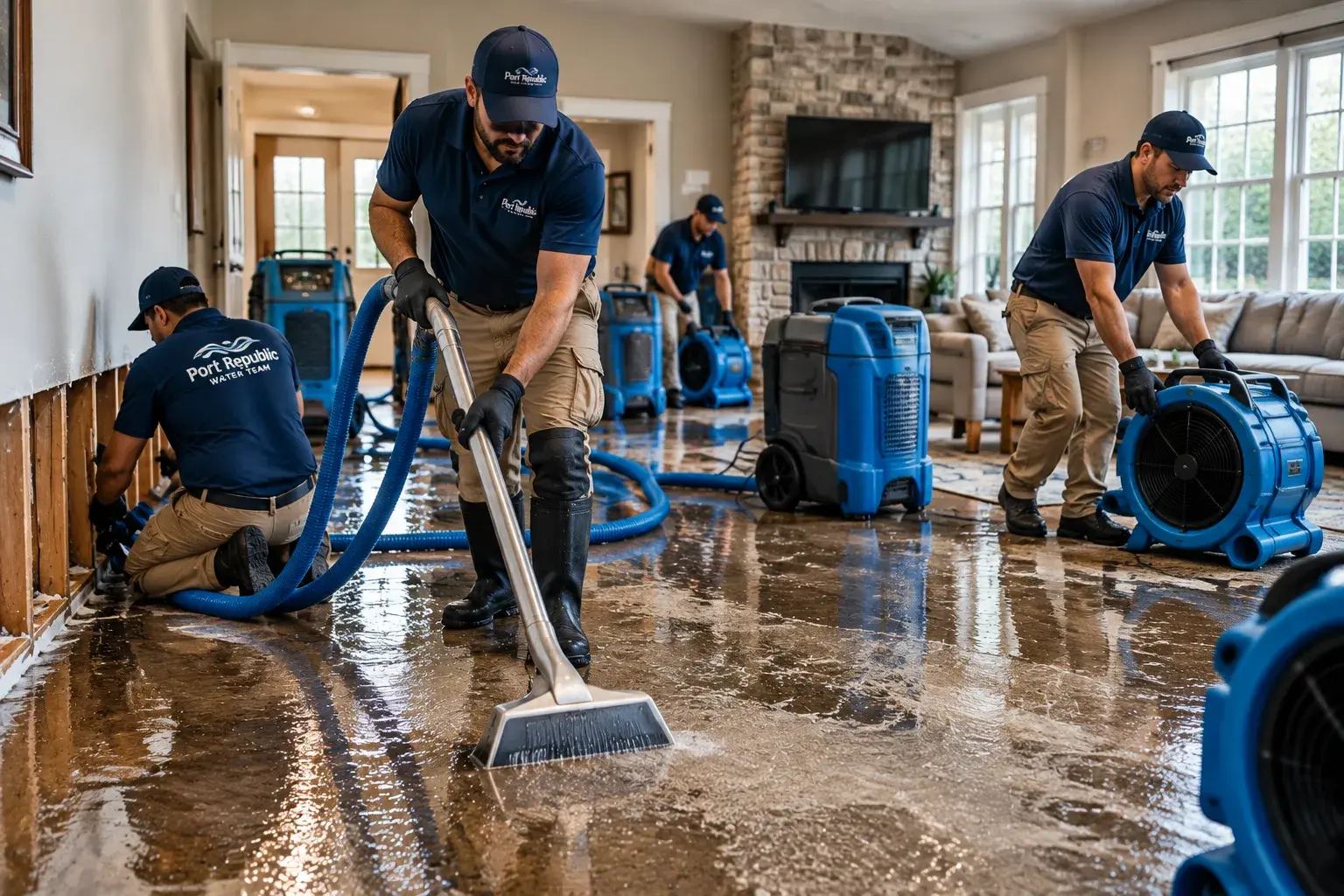
24/7 water removal, drying and cleanup for Huntingtown homes and businesses.
Call Now · (443) 951-6283When you need water damage restoration in Huntingtown, MD, do not wait for a wet patch to reach the next room. We extract standing water, check walls and floor layers, and dry the building materials a pipe, appliance or storm leak has soaked. Call as soon as you notice the problem so we can discuss the source and access.
Huntingtown is a rural/suburban part of Calvert County, north of Prince Frederick, with ZIP 20639. Our water damage services in Huntingtown cover occupied homes, unused rooms, basements and crawl spaces. We help you work through the cleanup sequence, from water removal to the materials that need drying or replacement.
We remove water, check adjoining rooms and dry affected building materials. Your cleanup plan follows the leak from the first wet surface into the wall, ceiling or floor layers below.
Learn moreStanding water keeps spreading into porous materials. We use extraction equipment suited to the depth and floor surface, then check what remains wet so the next drying stage has a defined scope.
Learn moreA broken supply pipe can soak several rooms before the water is shut off. We extract the release, inspect the spaces around the break and dry the affected walls and floors.
Learn moreLeaks can appear as a frozen line thaws and water pressure returns. We follow the plumbing route, remove released water and check nearby insulation, ceilings and floor assemblies for retained moisture.
Learn moreA flooded lower level needs safe access, water removal and attention to stored contents. We check finished wall bases, flooring and adjoining spaces, then plan drying around the affected materials.
Learn moreWater beneath your home can wet insulation, joists and the underside of the floor. We review crawl-space access, remove pooled water and address the damp materials below your living space.
Learn moreWastewater needs controlled handling to keep contamination from spreading. We separate the affected area, remove sewage water and damaged porous materials, and clean accessible surfaces before the remaining drying work.
Learn moreStorm water can enter from above or cross a ground-level opening. We identify the interior water path, remove affected water and debris, and dry the materials left wet after the storm.
Learn moreA ceiling stain can hide moisture in insulation or framing above it. We trace the overhead water path, open affected materials where needed and dry the cavity before ceiling repairs begin.
Learn moreA leaking tank or connection can soak a utility room and nearby flooring. We remove released water, check the heater platform and wall bases, and dry affected materials after source control.
Learn moreDishwashers, washing machines and refrigerator lines can leak into concealed spaces. We check the appliance recess, cabinet bases and floor layers, then remove water and dry the areas the leak reached.
Learn moreRain entering through a roof can travel before it appears indoors. We address wet attic or ceiling materials and interior moisture while you arrange correction of the roof entry point.
Learn moreA wiped floor does not mean the structure is dry. We use moisture checks, air movement and dehumidification to dry accessible framing, wall assemblies and subfloors after water removal is complete.
Learn moreSoft or contaminated wallboard can block access to wet insulation and framing. We define the removal boundary, protect adjoining dry surfaces and open the affected cavity for cleanup and drying.
Learn moreWater can move through board joints and remain beneath a wood floor. We check the boards and subfloor, remove accessible moisture and assess drying needs before flooring repairs are planned.
Learn moreNot sure where water traveled or why a stain returned? We review the leak history, inspect visible and accessible materials, and map moisture to help define the work your property needs.
Learn moreWater damage can affect staff routes, stock and several occupied spaces at once. We coordinate with your building contact, define work zones and organize extraction and drying around safe access.
Learn morePersistent moisture can support growth behind finishes and on porous materials. We plan controlled handling, remove affected materials and clean accessible surfaces while addressing the damp condition behind the problem.
Learn moreTell us what happened, what is wet and how to reach the property.
In a Huntingtown home, water from an unused room can reach a hallway or the level below before you discover it. We ask where the release started and which spaces connect to it, then extract accessible water and check the adjoining materials. Calling now helps us plan around occupied rooms and the wet boundary.
Our emergency water removal and water extraction in Huntingtown address pooled water first, then the moisture held inside building materials. Extraction equipment lifts accessible water from floors and coverings; air movers and dehumidifiers support the drying that follows. The longer wet materials sit, the farther moisture can travel into wall bases, insulation and subfloor layers. Call before that hidden damage spreads.
Water damage in Huntingtown can start above a ceiling, below the floor or beside everyday plumbing. We follow the source and the affected materials to choose the cleanup work.
A Huntingtown rural/suburban property can have a leak away from the room you use most. We follow the wet boundary into adjoining surfaces and spaces below, rather than stopping at the first stain.
Private wells serve many rural properties in the region. Tell us about the water supply when you call from Huntingtown so source control, extraction and access to wet utility spaces can be planned together.
Crawl spaces are a common regional home factor and can conceal water beneath a finished floor. We check accessible insulation and floor framing, remove pooled water and dry the materials affected below the room.
Regional basement homes can collect water around boxes, rugs and finished wall bases. At your ZIP 20639 property, we map those wet edges and plan contents access before drying equipment is positioned.
Tell us what happened at your Huntingtown property and whether water is still entering. We handle emergency dispatch 24/7 and discuss access with you before the visit.
We inspect the affected rooms and use moisture checks to map the spread. Wall cavities, floor layers and spaces above or below the leak are included where the water path leads.
We extract accessible water and set drying equipment for the affected materials. Moisture checks guide adjustments instead of relying on a floor that feels dry.
We clean affected surfaces and explain removal needs and the water damage repair scope in Huntingtown. Before finishes go back, we review remaining moisture and the separate source repairs or rebuilding needed.
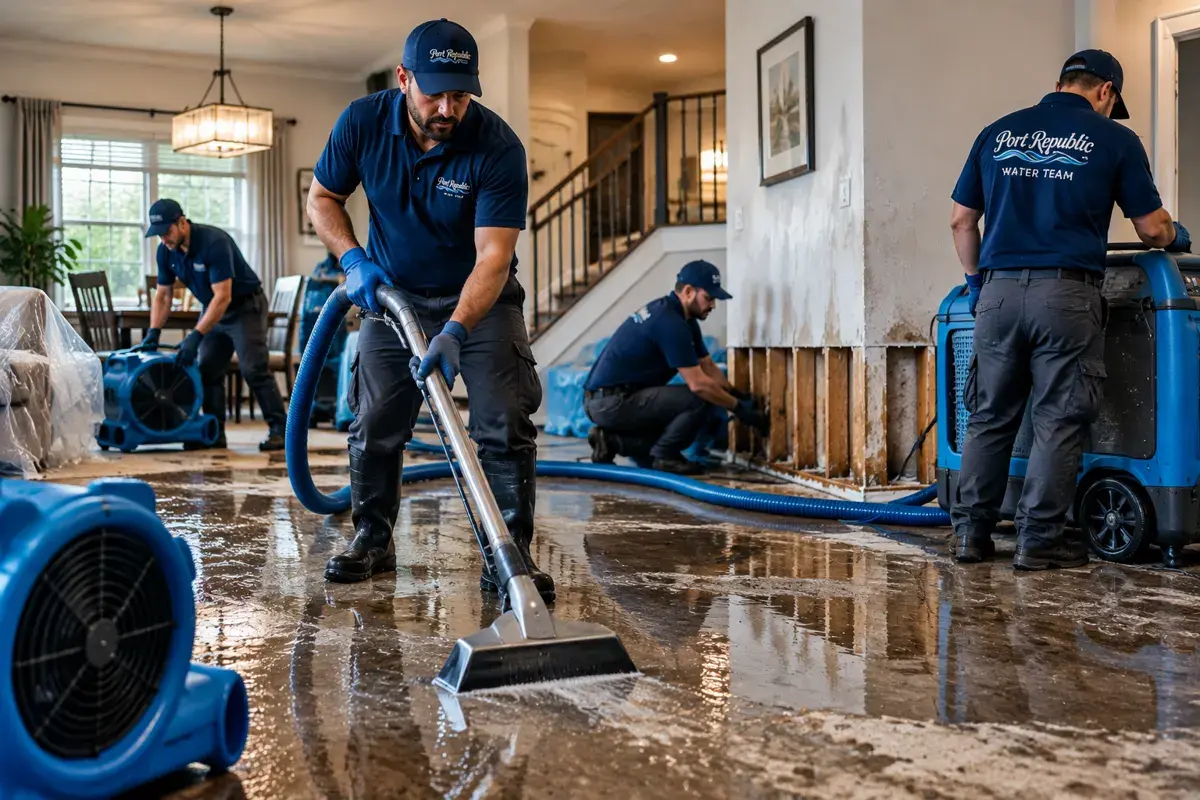
When a Huntingtown lower level fills with water, keep clear of electrical equipment and identify the entry route from a safe position. We remove pooled water and review affected belongings, wall finishes and floor layers. If sewage is involved, we separate that work area and use a contamination-focused handling plan. See our flooded basement cleanup and storm and flood damage services for the work involved.
Flood cleanup and mold removal in Huntingtown need to address moisture inside the building, not just standing water. Mold can begin growing when wet materials stay damp for 24–48 hours. We remove water, dry accessible assemblies and address affected porous materials to reduce the conditions that support growth. If growth is already visible, our mold removal service includes controlled handling and attention to the moisture source.
Call Now · (443) 951-6283Water damage restoration cost in Huntingtown depends on the area affected, the water source and which materials need drying or removal. The ranges below help you plan; access, contamination and drying time shape the estimate for your property.
| Job Size | What It Usually Involves | Estimated Range |
|---|---|---|
| Minor | A limited wet area, accessible water removal and localized drying. | $1,500–$2,500 |
| Moderate | Several adjoining materials, selective removal and a broader drying setup. | $2,500–$4,500 |
| Extensive | Multiple affected spaces, more material handling and longer drying needs. | $4,500–$6,000+ |
Typical ranges, not quotes. Call (443) 951-6283 for an estimate for your property.
Call Now · (443) 951-6283Call Port Republic Water Team when you need a water damage company near Huntingtown for a wet home, rental or business. We serve Huntingtown and the other Southern Maryland communities listed below, with emergency dispatch and mitigation available 24/7.
Yes. Describe the first wet area, changes after rain or fixture use and any standing water. We can discuss inspection and dispatch while the source-control work is being arranged.
Tell us which fixture stopped flowing, where water appeared after thawing and whether the supply is now off. Keep clear of wet electrical equipment and do not use an open flame on pipes.
Air movement and dehumidification serve different roles. We plan the equipment around wet materials and room conditions, then use moisture checks to review drying progress.
Move small items only when access and water conditions are safe. Avoid contaminated water or unstable stacks, and photograph the original position before handling belongings when practical.
Water can travel beneath flooring and through adjoining wall bases. Checking nearby materials helps us define the cleanup boundary before hidden moisture is enclosed.
Serving Port Republic and Southern Maryland, 24/7